Sunday, December 8, 2019

Please Tell Me Human Rights are Still Alive

Part 1: Human Rights and Why They're Important

I was going to title this "Are Human Rights Dead?", but I thought that was too much of a downer.  In this post, I won't be talking much about conservatism, because I think it's already clear that the conservative leadership is opposed to human rights.  If you don't believe me, consider Unpatriotic Acts I and II, oppressing the right to justice by throwing people in Guantanamo Bay who were only ever suspected of terrorism, and, well, just about the entire Trump presidency.  (If you need an example, earlier this year, Trump called a summit at the White House to debate human rights and discuss which human rights to keep and which to discard.)
Free Rights Cliparts, Download Free Clip Art, Free Clip Art on Clipart Library
My concern, in this post, is about a type of leftism that isn't my leftism.  I've come to call this other leftism alt-left.  In this series of posts, I'll argue that the alt-left is authoritarian, even if they don't realize it, and argue for moving back to a human rights based liberal left.

I'm a life long classic liberal.[1]  That is, I believe in the ideals of the Enlightenment, as progressed by our society into the Twenty First Century.  What I mean by that is that I support women's rights, racial rights, LGBTQ+ rights, religious freedom, disabled rights, etc.  The key point, though, is that I do so because I believe in human rights, from which these ideas naturally follow.  This is no surprise, because human rights and Enlightenment philosophy have been the underpinnings of many of the social changes in our society, including the Civil Rights movement and much of feminism.  They informed people like Martin Luther King.  The Suffragette Elizabeth Cady Stanton led a serious paraphrase of the Declaration of Independence to demand women's voting rights, and rightfully so, thus demonstrating that women's voting rights follow naturally and logically from the very ideals that founded America.  The oppression of women in a free society is a contradiction in terms, but a hypocrisy that many generations of women had been forced to endure.  It was these very ideals that allowed the women's movement, the civil rights movement, the gay rights movement, and so forth, to progress our society.

I also see classic liberalism, as I mean it, as supporting equal opportunity, promoting class mobility, providing our children with their right to an excellent education (which I would say is currently being oppressed), making sure everybody has the healthcare they need, supporting women's reproductive rights (it's their bodies and the government should stay out of it), providing a safety net for the poor, etc.  In short, I understand classical liberalism in America to be on the left and basically progressive in nature.

Because I have a lot to say, I've decided to break my content into what will probably be three posts, as follows:
  • In "Part 1: Human Rights and Why They're Important", I'll discuss why I think human rights are so important and why they should be the underpinnings of all progress in the west.
  • In "Part 2: Why the Alt-Left is Authoritarian", I'll explain why I think that this certain alternative leftism I'm seeing these days is actually authoritarian, even if its adherents don't know it.  I'll also explain why I think this is an extremely dangerous move, not only for classic liberals like me, but for the alt-left adherents as well.  That is, it's a lose-lose proposition.
  • In "Part 3: A Return to Liberalism", I'll argue that, to keep a free society, and to achieve the ends all of us on the left want, we should return to a truly liberal paradigm that focuses on human rights.

What is the Enlightenment?

Here's what Wikipedia has to say: https://en.wikipedia.org/wiki/Age_of_Enlightenment

The Enlightenment was a period of changing thought and philosophy in the Sixteenth and Seventeenth Centuries.  It shifted western thought away from old concepts that were still residual from the Medieval period.  The old guard of that era endorsed:
  • the Divine Right of Kings (the Medieval idea that monarchs have been given the right to rule by God)
  • a hierarchical view of rights, which understood aristocrats as having more rights than members of lower classes
  • the notion that monarchy was normal and good
  • the concept that rights only came from governments, rather than being universal
  • that countries could and should have official established state religions that every citizen had to be a member of with the full force of the government to imprison, torture, and even kill anyone who wasn't. (By "religion," at that time, they meant what we would call denominations of Christianity, such as Catholic, Anglican, Puritan, etc.).  
Best Jean Jacques Rousseau Illustrations, Royalty-Free Vector Graphics & Clip Art - iStock
The Enlightenment was a social revolution that changed all that.  It held that:
  • kings have no divine right to rule
  • governments should be run by the people
  • everyone should have equal rights, regardless of class or title
  • there are inalienable rights that everyone has, regardless of the law of governments
  • people have the inalienable right to freedom of religion and, thus, that countries should not have official religions or, if they must, that citizens should at least be completely free to have different religions than the one established by the government.[2]
If the Enlightenment ideas make more intuitive sense to you than the pre-Englightenment ones, it's because the Enlightenment thinkers were so successful in changing society.  For example, in the 1770's, 13 British colonies in North America, armed with Enlightenment philosophy, fought a bloody revolution against the Crown to found the United States of America.

What Are Human Rights?

This is what Wikipedia has to say: https://en.wikipedia.org/wiki/Human_rights

Human rights are basically the second generation of a concept that originally came from the Enlightenment.  I think it's fair to think of them as Neo-Enlightenment ideals.  The older concept from the actual Enlightenment was something called natural rights.  When the Declaration of Independence talks about "inalienable rights", it means natural rights.  Natural rights are the concept that every human being has been given rights by nature, and ultimately God, which transcend any restrictions imposed on people by the government.  These include things like freedom of speech, freedom of the press, freedom of religion, the right to justice (no searches and seizures without a warrant, trial by a jury of one's peers, etc.), and many of the rights that are normal to us in free societies like the U.S.
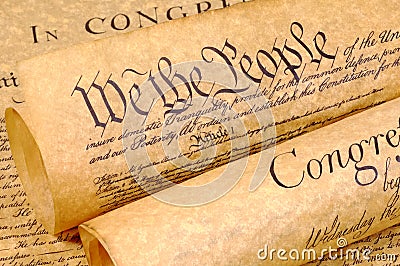
https://thumbs.dreamstime.com/x/declaration-independence-341576.jpg

However, as science advanced, this concept needed to be retrofitted.  For example, Darwin proved that living organisms like us evolve over time.  This calls into question the idea that a God is necessary to explain nature.  If we weren't created according to some divine plan, the idea that nature and God provide us with inalienable Natural Rights would seem to come under threat.  The retrofit is to simplify the claim.  Human beings, then, by our very nature and existence, have inalienable human rights.  So human rights are not all that different from natural rights.  No God or nature needed.  Think of human rights as natural rights 2.0.

Human rights include everything that I've already listed (freedom of speech, etc.), but have been expanded.  We have the inalienable human rights to egalitarian respect (as opposed to deferential respect), dignity, and education, for example.  Human rights are a major part of the underpinnings of our understanding today of what a free society is.  A free society is a nation that is not only of the people, by the people, and for the people (think democracy, here), but one in which the government defends people's human rights.

There's one last point.  I mentioned that natural rights transcend any government laws.  The same is true of human rights.  This is extremely important, so pay attention, please, because I've heard way too many people get this wrong.  There's a difference between human rights and legal rights.   A legal right is given by the government.  A human right is a right that each of us has regardless of the government.  Which one is the Bill of Rights?  Well, it's legal rights, but it's in our constitution because our founders believed so strongly in inalienable rights that they made sure our legal rights matched our inalienable ones.  That is, they took responsibility for making sure our free society does not oppress our inalienable rights.  While human rights can be oppressed, they can never be taken away.  Let me explain.

In a truly free society, the government's laws will always be aligned with human rights.  However, if a government fails to grant human rights to the people, that government is oppressing its citizens' human rights.  For example, because Saudi Arabia does not have freedom of religion (it imposes Muslim law on its citizens), it is oppressing its citizens' inalienable rights to freedom of religion.  Those citizens still have those rights (they're inalienable and cannot be taken away, because they're inherent in being human), but they are oppressed.  Every human being on earth as the inalienable right to freedom of religion, because freedom of religion is a human right, and human rights transcend legal rights.  Therefore, and this is critical to pay attention to because I'm downright frightened at how many people get this wrong, every human being in Saudi Arabia, just as every human being everywhere, has the inalienable right to freedom of religion.  It's false to to say that people don't have freedom of religion in Saudi Arabia, because that's thinking in terms of legal rights, not in terms of human rights.  The correct thing to say is that Saudi Arabia is oppressing people's freedom of religion. 

For more information: https://en.wikipedia.org/wiki/Freedom_of_religion_in_Saudi_Arabia

Another instance of this is that Guantanamo Bay is a human rights violation.  I've heard people defend it on the grounds that it was, apparently, according to them anyway, technically legal.[3]   Every human being on the planet, regardless of nationality, has the right to justice, to be confronted with the crimes of which they're accused, to be put on trial, and not to be imprisoned for long periods (say, longer than a day or two) without being accused of a crime, etc., etc.  They also have a right to a lawyer, to not be tortured, to not be forced to testify against themselves, etc., etc.  So, the U.S. government violated the human right to justice of the people it threw in Guantanamo Bay.


(This is the picture from the Wikipedia article: https://en.wikipedia.org/wiki/Guantanamo_Bay_detention_camp)

Another point, which follows directly from this, is that there's only one set of human rights.  People may disagree about what those are, but you can't have one set of human rights in one country and a different one in another country.  Whatever you think is on the list pertains to absolutely every human being on the planet without exception, and beyond borders, otherwise you're not talking about human rights.  Legal rights vary from country to country, but human rights do not.  This is because human rights come from the fact that we're human, not from any government.  So, Saudi Arabia, for example, can't just say, "well, here in Saudi Arabia, people have different human rights than they do in the U.S."  If they do, they've misunderstood the concept.

A belief in human rights is critical to any contemporary belief in a free society.  Without human rights, we are not truly free.  To believe in a free society is to believe in human rights.  To oppose human rights is authoritarian.

The Alt-Left Threat to Human Rights

In my next post, I'll talk about how I think a certain type of leftism, which I've termed the alt-left, has abandoned the concept of human rights in favor of something that, whether they know it or not, is actually authoritarian.

I've thought about this for a long time.  There have been times when I felt like I was in an H.P. Lovecraft story.  It felt like I was walking through some nice neighborhood, rounded a corner, and met a tentacled and fanged monster about to eat me.  I'm referring to something subtle here.  It's not what classic liberals like me affirm vs what this alt-left identity politics cult affirms, but how we each affirm it that makes us different.
Cthulhu Monster - Royalty-free Kraken stock vector

This alt-left, believes, as I do, that we should support groups that have traditionally been oppressed, such as women, people of color, LGBTQ+, disabled people, religious minorities, and the lower classes.  That's not in question.  What differs is our methods and, more deeply, our underlying philosophy.  I know that human rights have a very important and central place in the philosophy that drives my classical liberal convictions.  However, I'm worried that human rights have little or no place in the underlying philosophy of this alt-left and that makes them authoritarians, whether they know it or not.

More on this in the next post and, after that, in the third post, I'll propose my solution.

---
[1] I mean that in the American sense of the term.  I realize that in Britain and Europe, the term "liberal" can have other meanings. 
[2] What I've described is fair, I think, middle of the bell curve, as a thumbnail of what Enlightenment thinking was more or less like, but there was actually a lot of debate among Enlightenment thinkers, as there is with any school of thought. So what I've said isn't necessarily true in absolutely every case but shall serve, for the purposes of this post, as a workable reference point.
[3] I still don't get that myself... but there's some twisted way in which the U.S. government sending foreign nationals to a U.S. military base in Cuba, somehow, apparently, according to its advocates, anyway, somehow circumvents the rights guaranteed to us by the Bill of Rights in our constitution... I'm still dubious about the legality of Guantanamo Bay, but, if true, its prisoners did not have the legal right under U.S. law not to be sent there, but they certainly had the human right not to be sent there, which means our government oppressed them.

Monday, January 7, 2019

Manners for Debating, Arguing, and Disagreeing

I'm often surprised that people are vicious, nasty, or just downright rude when they disagree.  Discussions, debates, and even arguments (so long as they're more on the rational and less on the emotional side) should be normal in a democracy.[1]  I see rudeness in person and even worse nastiness online.  That seems to be true of anything people disagree about, but it seems to go quadruple for politics, religion, or social issues.

However, I recently discovered that maybe my surprise is unwarranted.  I checked several reputable sources on American etiquette and was even more surprised to find that they actually have little, if anything, to say on how to actually disagree in a civil way.  Letitia Baldrige's "New Manners for New Times" (by the woman who counseled Jacqueline Kennedy) had nothing whatsoever to say on the matter.  emilypost.com, named after the famous etiquette expert who was popular in the late 19th and early 20th Centuries, had only a couple of articles, and much of both articles were about when not to debate, which dodges my question.  (Though, more on this in a bit, because it did have a few nuggets of good advice.)  In any case, this advice obviously did not come from Emily Post herself, since she died in 1960 and the advice references social media on the internet.  Asking several friends, I discovered that they were simply taught not to discuss politics with people who are likely to disagree with them.  While that may help make nice with others, we have long been free from monarchy, and it would seem to me that such etiquette might be useful in a world in which the monarch might chop your head off, but, in a democracy such as ours, we need to be able to discuss and debate politics in a civil way.  How else can we communicate politically?  Without communication, all we'd really have is a sort of cold civil war: a war fought with sharp tongues and flame wars rather than guns and bombs, but not any real civilized country of, by, and for the people.  We need something better than just "don't discuss politics with people whom you don't expect to be like-minded", "don't discuss politics or religion at work," or "don't discuss politics or religion in the bar".  Yes, we shouldn't discuss these things at weddings, funerals, on a family vacation, or the like, but, normally, we should be able to discuss them and do so in a civilized way.

So, a few good pieces of advice from emilypost.com aside, in good American fashion, I've decided that I'm as qualified Emily Post and Letitia Baldrige since both American etiquette experts, apparently, neglected to even weigh in on the subject of debate etiquette.  So, here are my ideas (augmented by those promised nuggets from emilypost.com and attributed as appropriate).  These ideas mostly give examples of political debate, but they are meant to cover all sorts of disagreements, including social, ethical, religious, and philosophical ones (and whether Mac or Windows is better).

1. Don't Assume You're Right

If we think about it rationally for one moment, none of us knows much of anything, not for sure, anyway.  We may know we exist (Descartes said "I think, therefore I am").  We may know 2 + 2 = 4 (some philosophers will no doubt disagree, but what do they know?).  We may know that we're sitting in the chair we're sitting in (at least empiricists would say we can probably be certain of that).  However, we almost certainly do not know that: we need tax cuts or universal healthcare, how and when, if at all, we should user our military, whether or not women should have a right to have an abortion [2], what our policy toward illegal immigrants, if any, should be, etc.  Ditto for how we understand gender, race, and sexual orientation, how what our theology, if any, is, whether we believe in free will or determinism, whether Jesus was really God made manifest in flesh, or whether Mac or Windows is better (hint: it's Linux!).

The moment we think that we know, we invalidate the opinion of anyone who disagrees.  In order to debate or otherwise respectfully disagree with someone else, we have to be open to the idea that we might be wrong, even if no one will ever be able to persuade us of such.  As soon as we take the stance that we must be absolutely right and the other person must be absolutely wrong, we setup the situation where there's "no talking to us".  That's what the other person will think of us, and they'll be right.

That doesn't mean we have to concede.  We have the inalienable right to hold on to our opinion to the last.  It only means that we need to treat the other person as if they're intelligent, probably has thought through their opinion, and probably does have some reason for believing it (even if it's a bad one).  Only when we allow for this are we creating the necessary respect for any true debate to take place.  Otherwise, we're just trying to bully them into submitting to us rather than sincerely listening and having a meaningful dialog.

emilypost.com's advice is this:
"No matter how perceptive you think you are, you can’t possibly know someone else’s personal beliefs. Don’t presume that someone agrees with you–or disagrees, for that matter."[3]

2. Don't Attack the Other Person

A debate is not a war.  Just because someone disagrees with you doesn't mean they've pulled out a gun and are prepared to shoot you.  These things are very different!  Yet, people very often react as if the very fact that someone disagrees with them is an attack and seem to think they have to attack back.

Instead of attacking, simply listen to what the other person has to say, then listen to why they think it (ask them if necessary, but not in your attack voice).  I'm often amazed by how many people are unwilling to even find out why I think something.  It seems totally illogical to me that someone would simply assume I'm wrong and lash out at me for having a difference of opinion when they haven't even given me a chance to explain why I think it.  Going back to #1, how do you even know you're right?  Even if you are, maybe listening to their reasoning will give you insights into why other people think something else.  If you're wrong (and sometimes we're wrong), you may learn something.  If nothing else, even if you still stick with your current opinion, you may hear a counterargument you've never heard before and that may make you think.  Even if you reconsider and then say "nah..." and go back to your original opinion, the thought process was probably helpful.  So, listen to their reasoning.


Finally, when you've heard both the what and the why from then, tell them what you think and why you think it.  I'm often floored by how many people just bark back at me with their opinion without any attempt to bolster it with any logic or reason whatsoever.  I'm a strong person.  They're not going to bully me into agreeing with them.  If they hope to convince me, they'll need to explain their reasoning.  Just stating what they think and not why is the least convincing thing I can think of for someone to say to someone else who obviously disagrees.

emilypost.com has some useful advice, here:
"Don’t make it personal. Comments such as, “I can’t believe you think that,” are perceived as attacking the other person’s character rather than engaging in discussion. Stay away from personal, opinionated, or judgmental comments, as political conversation can often deteriorate into pejorative dumping sessions. Keep in mind, too, that asking for someone else’s point of view doesn’t mean you have to agree or cede your own position." [4]

3. Avoid Sophistry

Plato distinguished between sophistry and logic.  Sophistry is when you start out with the conclusion you want to be true and then back-fill it with whatever rationalization will seem to support it.  It fails to prove anything other than you're an egotist.  Logic is when you start out with first principles or givens (e.g. "I think, therefore I am", 2 + 2 = 4, or I really am sitting in the chair I think I am) and go forward with rational steps and find out what conclusion you reach.  The former is dishonest, while the latter is honest.

I've had a lot of debates and discussions that went nowhere because I was trying to use reason and the other person just said whatever they thought would convince me, however illogical.  The other person, in every case, only managed to insult my intelligence.  I'm not stupid.  In fact, I'm well educated.  So, I can see right through a lot of these sorts of arguments.  Sophistry only insults the intelligence of the other person and proves you to be dishonest and disingenuous, since it's basically just slight-of-hand.  It does your side of the debate no real good, makes it look like you have such a poor argument that you need to resort to dishonest tactics, and disrespects the person you're debating.

4. Avoid Emotion

It's fine to be emotional.  We very often are when confronted with a very different opinion from our own, particularly when it's something deeply held, like politics or computer operating systems.  However, responding emotionally is rarely the right thing to do.  The reason is that it's not rational.  "I'm angry that you disagree with me on this," is unhelpful in explaining why you have a different opinion from the other person.  We can easily see this if we told someone that 2 + 2 = 4 and they immediately started yelling at us, saying "no it equals 5!".  We'd immediately think, "what's their problem?"  So, responding emotionally does no good.  They probably weren't trying to upset you.  They're just telling you their opinion.  So, take a deep breath if necessary, and just stay rational and level-headed.

I particularly find responses like "how can you say that?" or "how can you think that?" to flat out rude.  It's divisive.  It implies that the only possibility is that they're right and you're wrong and, worse, insults the character of the person who stated their opinion, because it implies that no good person would express such an opinion.  How do you know if you don't even bother to find out why they think it?

5. Be Respectful

This is, straight up, the most important of all.  Living in a democracy means that we should at least respect the exercises of free speech and free press.  As soon as you disrespect the other person, they'll almost certainly stop listening to you.  Why should anyone come around to your opinion if you disrespect them?  If you're to have any hope of convincing them, you have to start with respecting them.  They're a human being, however repugnant you may think they're opinion is, and they are, ipso facto, deserving of respect and dignity.

6. Concede Valid Points

A lot of people think they're doing a good job of arguing by never conceding a single point.  Actually, they're not only doing a bad job, but being rude to boot.  They're doing a bad job, because to not concede logical points from the other side implies that you don't really believe in reason (see my section on Sophistry, above).  You don't have to admit defeat or change your entire opinion just because you've conceded some points.  And... sometimes people have valid points you haven't thought of before.  Acknowledging their fair points will respect them, bolstering their feelings that they're engaged in a fair and rational debate, and also allow you to take something away from the debate to mull over that you might not have fully considered.  It will also set up the circumstances in which they'll feel better about conceding some of your points.  Even if you decide later that you're still right and they're still wrong, it will still have strengthened your position to consider the other side.  At best, you may find that you need to be more nuanced in your position, because you honestly hadn't considered a few things.   At worst, you'll have conceded a few points that are true, but don't undermine your own position.

7. Be Honest

There's absolutely nothing to be served in a debate by dishonesty.  It can be tempting, because we all want to win.  It boosts our egos and reinforces our opinions.  However, dishonesty is ultimately self-defeating.  If you're dishonest, and your opponent has any intelligence, they may well see through it, for one thing.  More deeply, though, the honest arguments are better because they're more truly rational rather than being sophistry.  Also, consider your relationship with the person with which you're arguing.  Honest debate will prove your good character to them.  If they debate honestly in response, you'll see their good character (even if you can't stand their opinion).  Finally, sometimes the best rebuttal, when someone really has you on the ropes in a debate, is to simply fall back on honesty.  There have been times when I've had someone else make a really excellent point that I hadn't considered, it stunned me at first, but then I recovered and simply told them the truth with words such as, "that's a fair point.  I hadn't considered that.  I'll have to think it over.  But, I still ultimately think I'm right, because, at a deep level, my opinion comes from my moral convictions and my values.  I want to be right and I hope I am, because I think my position is a moral one."  That's very candid and honest.  It doesn't admit defeat.  In fact, quite the opposite.  It gives the other person something to think about.  Maybe you're technically wrong about some details, but you're driven by a strong value that that guides you to your conclusion.  Expressing that honestly, can sometimes clarify the terms of the debate. 

I once had a nasty debate with a woman I consider to have been rude, dishonest, and rather vicious.  As I debated her on an email list, her points only became weirder and weirder.  I felt like I was falling down a rabbit hole into Wonderland.  The debate was over matriarchal prehistory, the notion that European society was matriarchal in the neolithic period.  My stance, which is backed up by very strong, up to date academia, is that it's a myth for which there's very little real evidence.  (See "The Myth of Matriarchal Prehistory" by Cynthia Eller for an example of the scholarly view I was taking up.)  This woman argued vehemently with me, violating just about every rule I've listed in this post, that I was wrong.  If she had only said something like, "you make good points about our lack of evidence, however, as a feminist, I'd really like to think that there was some time and place in which human society was non-patriarchal," I would have respected her position and possibly even changed my focus completely to commiserating with her about patriarchy, since I too oppose it.  Since she didn't say that and just kept on coming up with more and more bizarre sophistry, it didn't occur to me until much later that that might be why she was arguing with me so vehemently.  I was thinking we were debating the facts and thought she was being illogical.  To this day, I regret that I don't know what she was thinking, because I broke the thread off when I realized it was only going to go further down that rabbit hole.  It was only later that I considered what values might have been driving her.  If she had only expressed them, she would have found out that I agree with her anti-patriarchal values even though I disagree with her about what we know about neolithic Europe.

8. Don't Try to Prove How Oh-So-Smart You Think You Are

If you're only debating to "prove" how "smart" you are, you're probably either not all that, or else you're insecure.  Debating people just to demonstrate your intelligence is rude since the other person is probably sincere in trying to share their thoughts, you're probably using sophistry to "prove" your intelligence, and, ultimately, you have a much different, and less honest goal than the other person.  It's just plain rude!  If you're insecure, raise your self-esteem instead.

Final Thoughts

Finally, people are rarely persuaded right then and there by somebody else's very different opinion.  While I don't think it's rude, per se, to out-and-out debate someone down to every point with the intent of persuading them, it may actually be better to simply have an exchange of what each person thinks and why they think it. 

Also, take a debate as an opportunity to deepen your opinions and to see if they really stand up to reason.  If we come at debates combatively, we rarely win.  We almost never convince someone on the spot.  We only show our bad character.  However, if we take it as an opportunity to find out not just what but how someone else thinks about something and to think more deeply about our own opinions, we may learn something.

---
[1] Some smart ass will no doubt tell me that the U.S. is technically a republic.  To them I say that what I mean is a government "of the people, by the people, and for the people" as our own constitution defines it.
[2] Yeah... I know... it seems obvious that they should to me too, but it's obviously not obvious to everybody, because a huge percentage agree that it should be banned (what percentage that is will vary greatly by internet search).  I very strongly think it should stay legal, but that doesn't mean I know that absolute certainty, since we can never be absolutely sure of anything.
[3] https://emilypost.com/advice/avoid-political-pitfalls/
[4] https://emilypost.com/advice/reuters-talking-politics-at-work-and-home/